
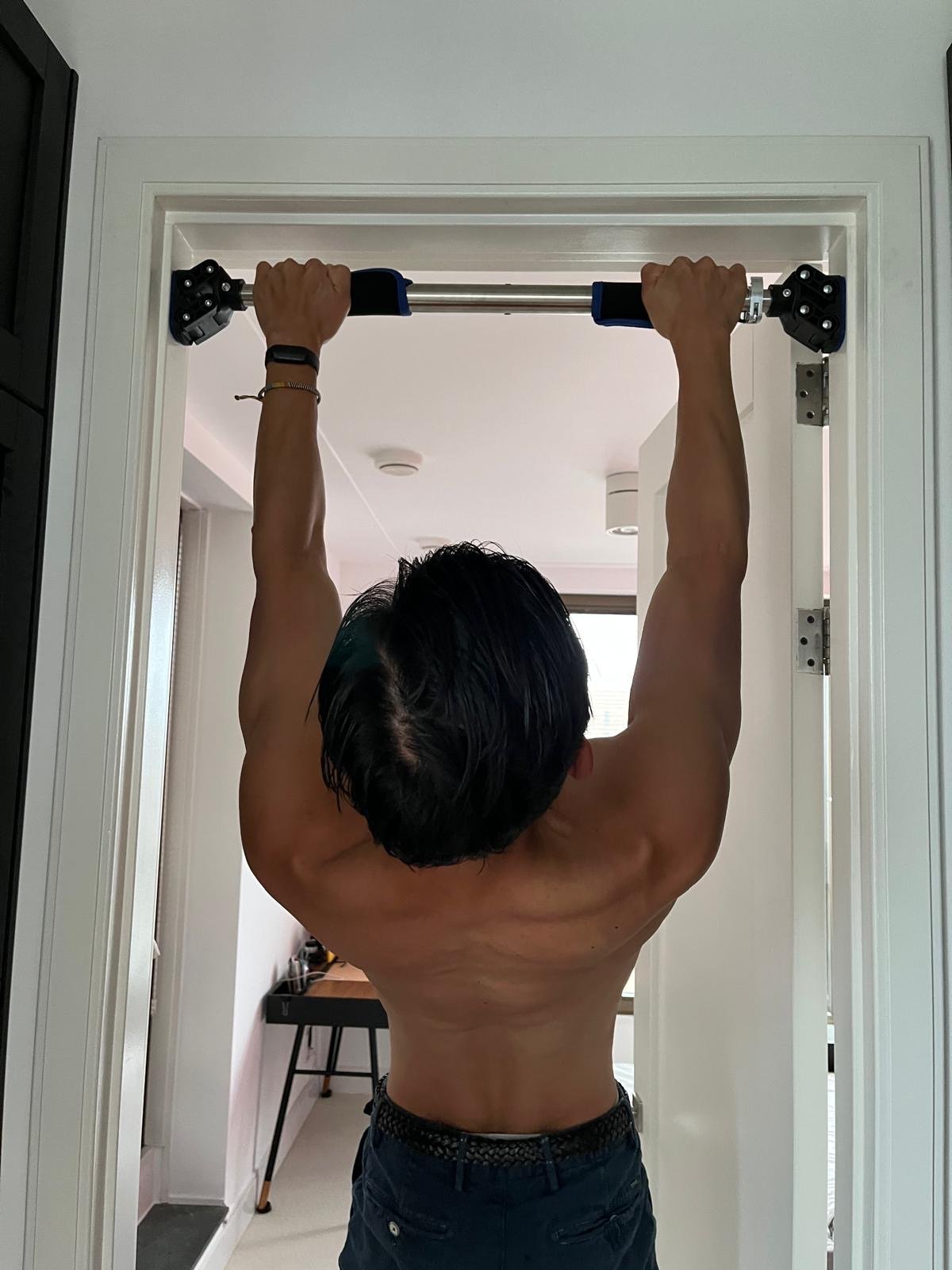
Calisthenics is built on four movement categories: push, pull, legs, and core. Push and legs are easy to train anywhere. Push-ups, dips off a bench, squats, lunges, all of it needs zero equipment. Pull is different. Without a bar, there is no real way to train a vertical pulling movement at bodyweight. That’s the gap a home pull-up bar closes, and it’s why it earns a permanent spot in a serious calisthenics setup rather than sitting in a drawer after the first month.
Why Pull Is the Hard Category
Rows, pull-ups, front levers, and muscle-ups all share the same requirement: something to hang from and pull against. A bar is the one piece of equipment that unlocks this entire category of movement, and without it, pulling strength stalls no matter how much push and leg work gets done.
Between-Session Training
A bar mounted at home means pulling volume does not have to wait for a scheduled class. A few sets of hangs or rows between work calls, before breakfast, or after a walk add up over a week, and that frequent, low-friction exposure is often what separates steady pulling progress from a plateau.
Building Toward the Front Lever
The front lever is built in stages: tuck, advanced tuck, straddle, and full extension. Each stage needs repeated practice on a bar to build the body tension and shoulder strength the next stage demands, and having one at home means those holds can be trained as often as recovery allows.
Building Toward the Muscle-Up
The muscle-up depends on a false grip, an aggressive hip drive, and a fast transition over the bar, all of which take dedicated practice to groove. Drilling the false grip hang and the transition position on a home bar shortens the road to a clean rep considerably.
Grip and Tendon Conditioning
Wrist, forearm, and finger tendons adapt slowly compared to muscle, and hanging is one of the safest ways to load them. Regular, brief time on the bar builds the grip and connective tissue resilience that heavier pulling work later demands.
Training Frequency Matters More Than Duration
Short, frequent exposure to a movement pattern builds skill faster than occasional long sessions. Five minutes on the bar most days of the week teaches the nervous system more than one long pulling session every ten days, which is exactly the kind of frequency a home setup makes possible.
Mobility Work Belongs Here Too
Shoulder and wrist mobility protect every pulling movement above, and a bar is a convenient place to work on both, from dead hangs that open the shoulders to scapular movements that build control at end range.
None of this replaces structured coaching or the value of training around other people who push you. What a home bar does is fill the hours between sessions with the one movement category that has no bodyweight substitute. Progress compounds. A bar at home is what keeps that compounding going every day of the week, not just the days you’ve got a class booked.
