
Doorway vs. Wall-Mounted vs. Freestanding: Which One’s Right for You?
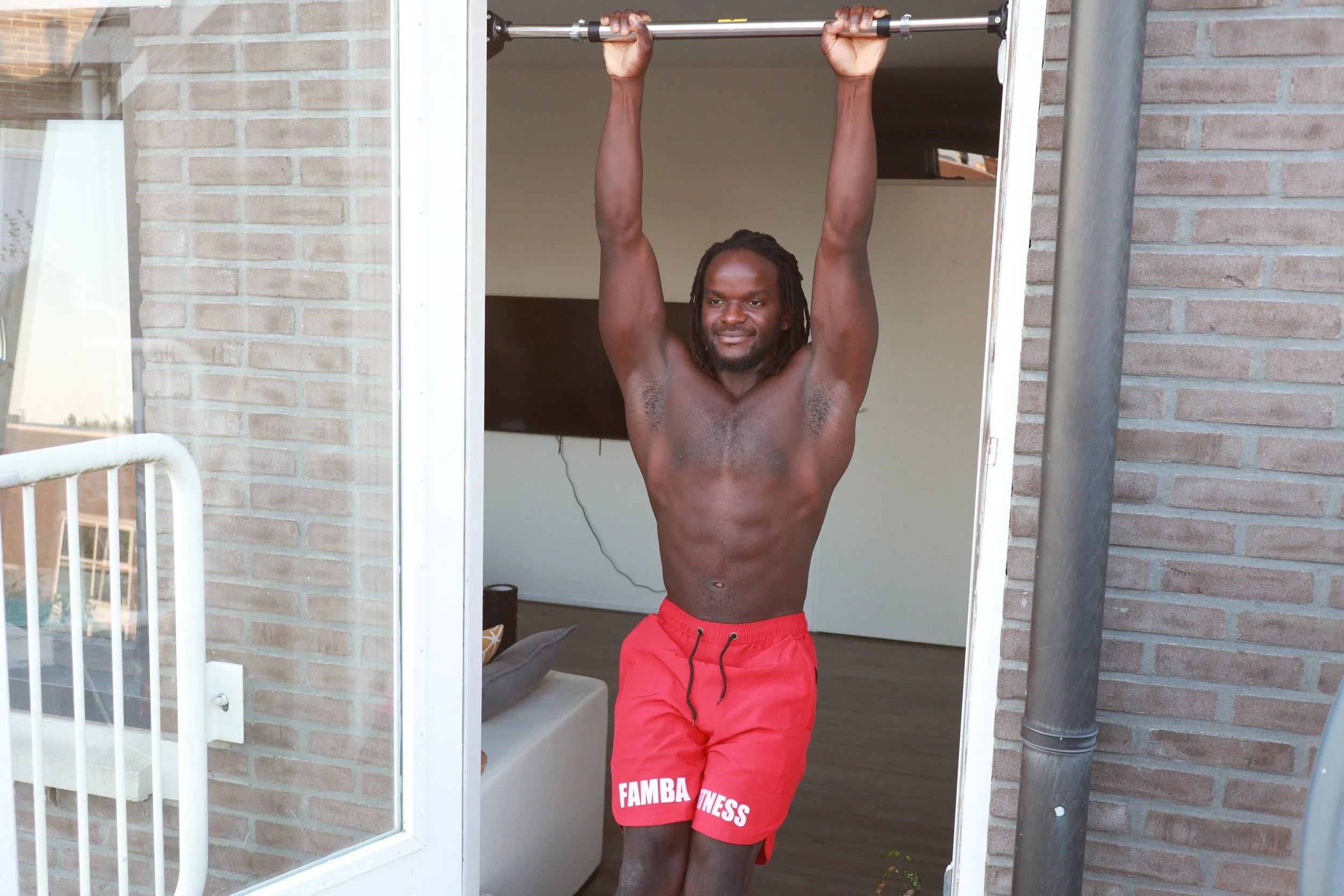
Before you buy a pull-up bar, you need to answer one question honestly: what does your home actually allow? Not what you’d like it to allow. What it allows. A beautiful wall-mounted rig is useless if you’re renting a canal-house apartment in Amsterdam West with a “no drilling” clause in your huurcontract. Here’s how the three main types actually compare.
Doorway Bars
A doorway bar wedges into your door frame using leverage, tension, or a screw-in mount, and most fit frames between roughly 60 and 82 centimeters wide. No drilling, no permanent marks, and you can move it between apartments in five minutes.
The catch: door frames aren’t built for pulling weight through them. Weight limits usually sit around 100 kilograms, wide-grip positions can be limited by the frame width, and older Dutch doorways with deep architraves or trim can make a snug fit tricky. It’s also not going anywhere near a kipping pull-up or a muscle-up without risking the frame itself.
Best for: renters, apartments, anyone who wants to test the habit before committing to something permanent.
Wall-Mounted Bars
A wall-mounted bar bolts directly into studs or masonry, and once it’s up, it’s the most stable option on this list by a wide margin. You get the full range of motion: strict pull-ups, kipping, muscle-up transitions, hanging leg raises without any bounce or flex in the bar.
The catch is obvious: it’s permanent, it requires drilling (into a stud in a wood-framed wall, or with proper masonry anchors into Dutch brick or concrete), and it’s genuinely not a good fit if you’re renting and don’t have permission to alter the wall.
Best for: homeowners, or renters with a garage, shed, or landlord sign-off, who want a bar that behaves exactly like the one at the gym.
Freestanding Bars (Power Towers)
A freestanding unit stands on its own base, needs no wall or doorway at all, and often comes with a dip station and push-up handles built in. It’s the most flexible option if your walls and doors are both off-limits, and you can relocate it to a different room, or the garden, whenever you want.
The trade-off is floor space. These units have a real footprint, cost more than a doorway bar, and a cheap one can wobble under dynamic movement if it isn’t weighted or bolted down.
Best for: people with a spare corner of a room or garden, who want dips and push-up handles alongside the bar, and don’t want anything touching the walls.
So Which One Should You Get?
If you rent and want to start now: doorway. If you own your place or have full permission to drill: wall-mounted, hands down the best long-term option for serious training. If neither wall nor door works for your space: freestanding.
What You’ll Actually Pay
Doorway bars sit at the lower end of the price range and are the cheapest way to test whether the habit sticks before spending more. Wall-mounted bars cost more upfront, largely because the bracket hardware needs to be rated for real load, but they’re a one-time cost with no ongoing fees, same as the other two options. Freestanding towers land at the top of the range given the extra steel and the dip station most include, though you’re also getting more than one piece of equipment for that price.
Noise, Neighbors, and Apartment Living
Worth a mention if you’re in a shared building: a doorway bar mounted with a leverage fit can creak slightly under load, which matters if you’re training early or late in an apartment with thin walls. A properly torqued screw-in mount or a wall-mounted bar tends to be quieter, since there’s no pressure-fit flex to creak. If you’re in a typical Amsterdam apartment building with shared stairwells and close neighbors, this is a small but real factor worth weighing alongside the bigger decision.
Whichever you choose, the deciding factor isn’t the bar itself, it’s whether it fits your actual home and actually gets used. A wall-mounted bar you never installed because the drilling felt like too much hassle trains nobody.
Find the pull-up bar that fits your home → /home-pull-up-bar
