
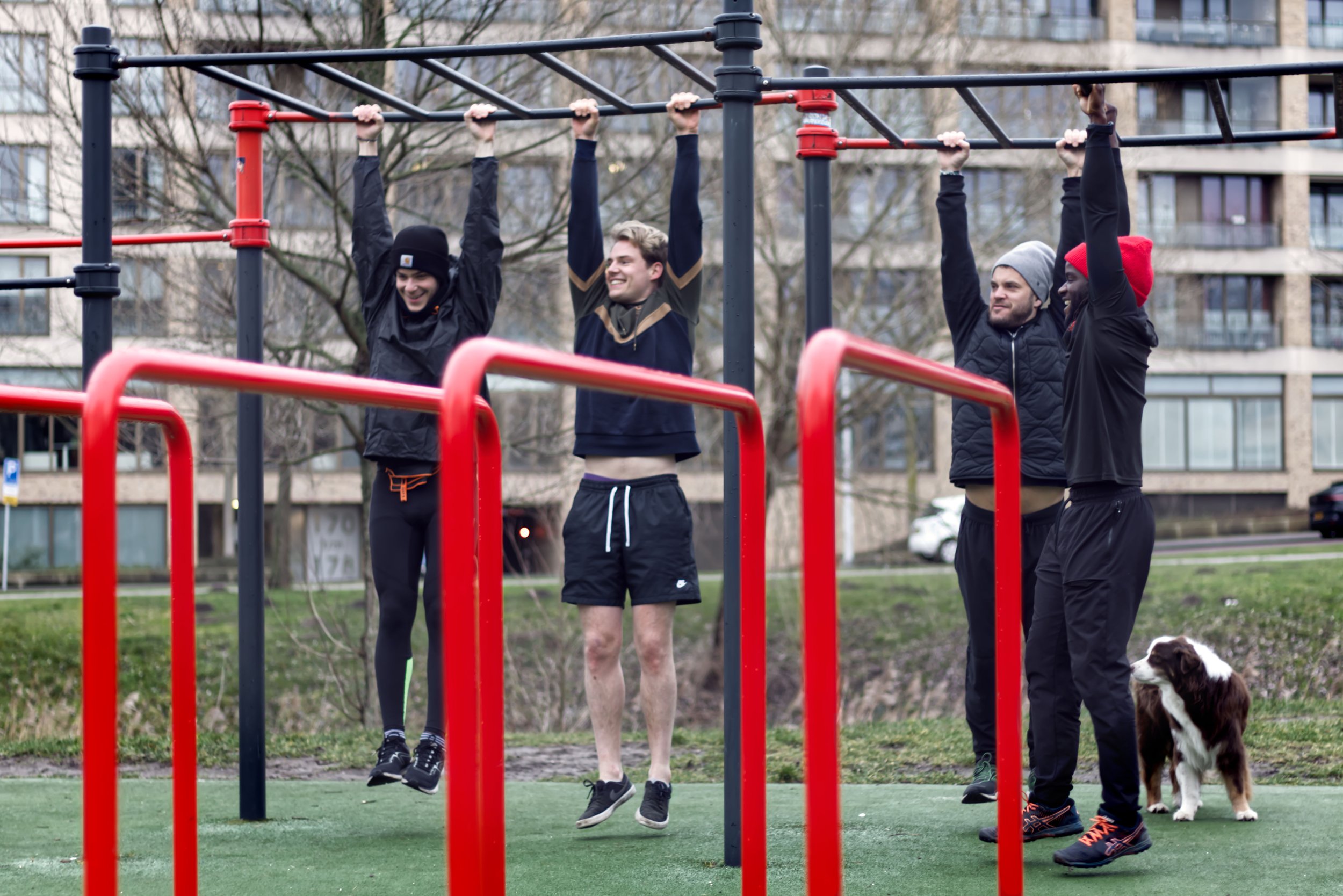
Grip strength is the one fitness metric that quietly predicts more than almost any other. It shows up in research as a marker tied to general strength and healthy aging, it’s the first thing to fail on a heavy deadlift, and it’s the difference between finishing a climbing session and giving up halfway up the wall. It’s also one of the most neglected parts of most people’s training, because it’s rarely the main event. A pull-up bar happens to be one of the simplest tools for training it directly.
Why Grip Fails Before Everything Else
Your forearm muscles are smaller than your back, chest, or leg muscles, so they fatigue faster under sustained load. That’s exactly why grip work matters: a stronger grip raises the ceiling on everything that depends on holding onto something, from a heavy farmer’s carry to a long hang during a calisthenics skill progression to just carrying groceries up four flights of stairs without your hands giving out first.
The Core Drill: Timed Dead Hangs
Grab the bar, hang with straight arms, and hold. That’s the entire exercise, and it’s still one of the most effective grip builders there is. Progression looks like this:
Weeks 1-2: 3 sets of 15 to 20 seconds
Weeks 3-4: 3 sets of 30 to 40 seconds
Weeks 5-6: 3 sets of 45 to 60 seconds
Week 7+: single-set holds pushing past 60 seconds, or add light weight (a backpack) to shorten the hold but increase the load
Variations Worth Adding
Towel hangs: drape a towel over the bar and grip the towel instead of the bar itself. The thicker, less stable grip surface forces your hand and forearm to work considerably harder for the same hang time.
Single-arm assisted hangs: hang mostly on one arm, using the other for light support (a finger or two on the bar), and switch sides. Builds unilateral grip strength, which matters more than people expect since most of us are noticeably stronger on one side.
Fat grip attachments: wrapping a thick pad or towel around the bar increases the diameter your hand has to close around, which is a different (and often harder) grip challenge than hang duration alone.
Grip Strength Outside the Bar
The carryover goes both ways. Farmer’s carries (walking while holding a heavy weight in each hand), if you’ve got dumbbells or even loaded bags, complement bar hangs by training grip under movement rather than a static hold. Between the two, you’re covering both the static and dynamic grip demands that show up in real training and real life.
Benchmarking Where You Stand
A rough guide for a single-set dead hang, useful as a check-in rather than a strict standard: under 20 seconds suggests grip is your current limiting factor in most pulling exercises. 20 to 45 seconds is a solid, functional baseline for general training. Past 60 seconds puts you ahead of most people who train regularly, and past 90 seconds is genuinely strong grip endurance by most standards. Test it every few weeks, always fresh and never at the end of a fatiguing session, so you’re comparing like with like.
Grip work takes almost no time (a few sets of hangs add maybe five minutes to any session) and the payoff shows up everywhere: heavier deadlifts, longer climbing sessions, more control during calisthenics skill work, and honestly, less annoyance opening a stubborn jar. It’s the rare training input with almost no downside and a long list of upsides.
