
How to Choose the Best Home Pull-Up Bar
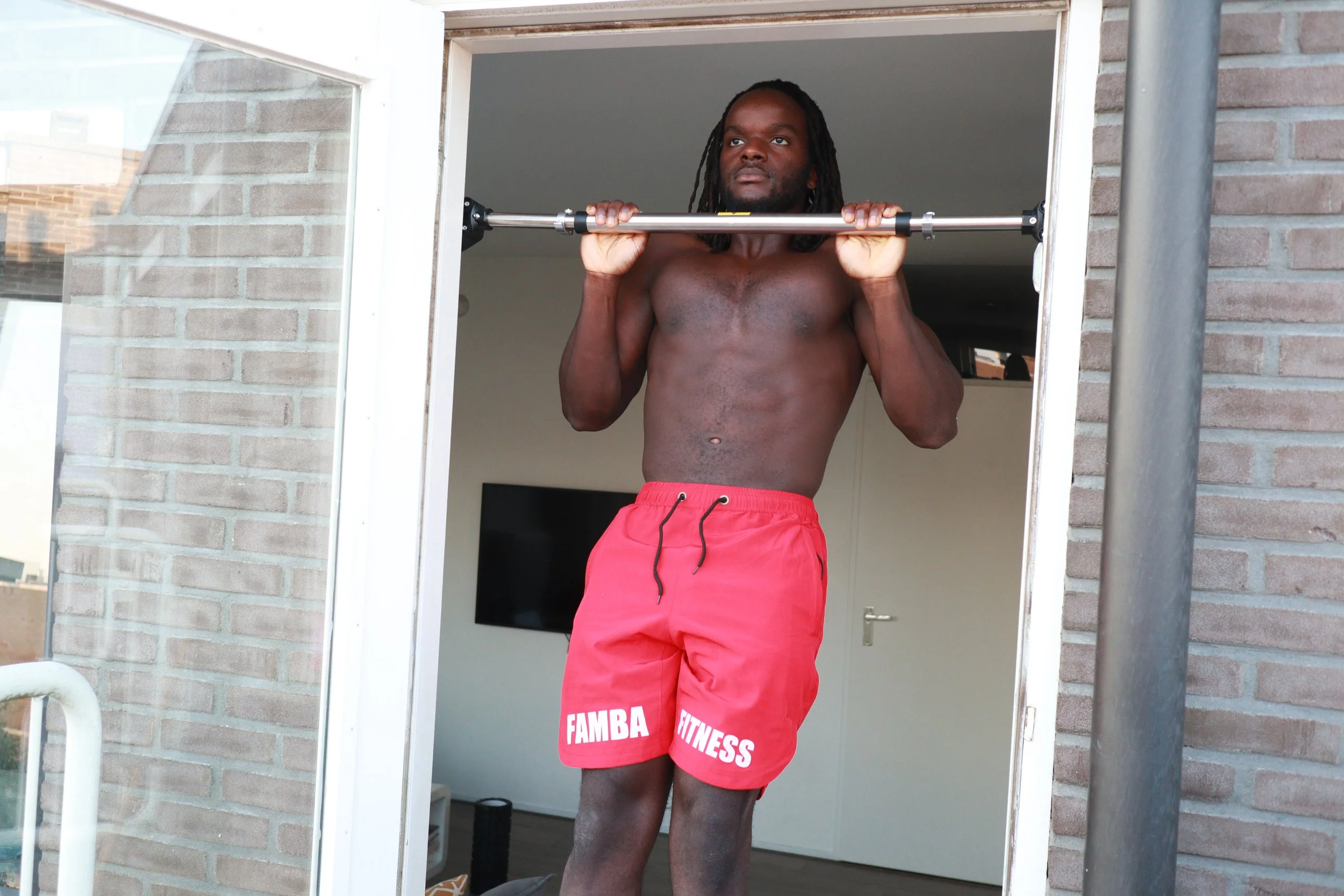
Thinking about buying a pull-up bar for your home?
With so many different options available, it can be difficult to know which one is actually right for you. There are doorway pull-up bars, wall-mounted bars, ceiling-mounted bars and free-standing stations, all with different designs and features.
The best home pull-up bar isn't necessarily the one with the most features or the highest price. It's the one that fits your space, feels secure, suits your training goals and, perhaps most importantly, is convenient enough that you'll actually use it.
Because that's the part that often gets overlooked. A pull-up bar sitting in your home isn't going to make you stronger by itself. Having easy access to one that you use consistently might.
What should you look for in a home pull-up bar?
Before buying a pull-up bar, there are a few things worth considering. Where are you going to use it? How secure is it? Will it fit your doorway? Does it require drilling? What is it made from? How much weight can it support? And what do you actually want to use it for?
These questions might seem simple, but answering them can help you avoid buying equipment that isn't suitable for your home or your training.
Where will you use your pull-up bar?
The first question isn't actually about the pull-up bar. It's about your home.
If you have a dedicated home gym with plenty of wall space, a permanently mounted pull-up bar might make sense. But if you live in an apartment, rent your home or simply don't want to dedicate an entire room to training, a doorway pull-up bar can be a much more practical option.
You don't necessarily need an entire room filled with equipment to start training calisthenics. Sometimes you just need to make better use of the space you already have. A doorway can become your training station, giving you somewhere to practise your pull-ups whenever you have a few minutes.
Stability matters
When you're hanging your entire bodyweight from a piece of equipment, you want to feel confident that it is secure.
This becomes particularly important when you're learning your first pull-up. If the bar moves, slips or feels unstable every time you hang from it, you're naturally going to hesitate. Instead of focusing on your movement, you're thinking about whether the equipment is going to hold.
A good home pull-up bar should provide a secure connection to the mounting surface and remain stable during normal training. For a doorway pull-up bar, look for features such as secure contact points, non-slip surfaces, a reliable locking mechanism, a strong frame and a weight rating that's appropriate for your needs.
These aren't necessarily the most exciting features, but they're some of the most important.
Check your door-frame width
One of the easiest mistakes to make when buying a doorway pull-up bar is assuming that it will fit your door.
Not every pull-up bar is designed for every doorway, so measure your door frame before buying and compare it with the manufacturer's specifications.
The Famba Home Pull-Up Bar, for example, is designed to fit door frames between 72 and 92 cm wide. This allows the bar to be adjusted to the width of your doorway rather than relying on one fixed size.
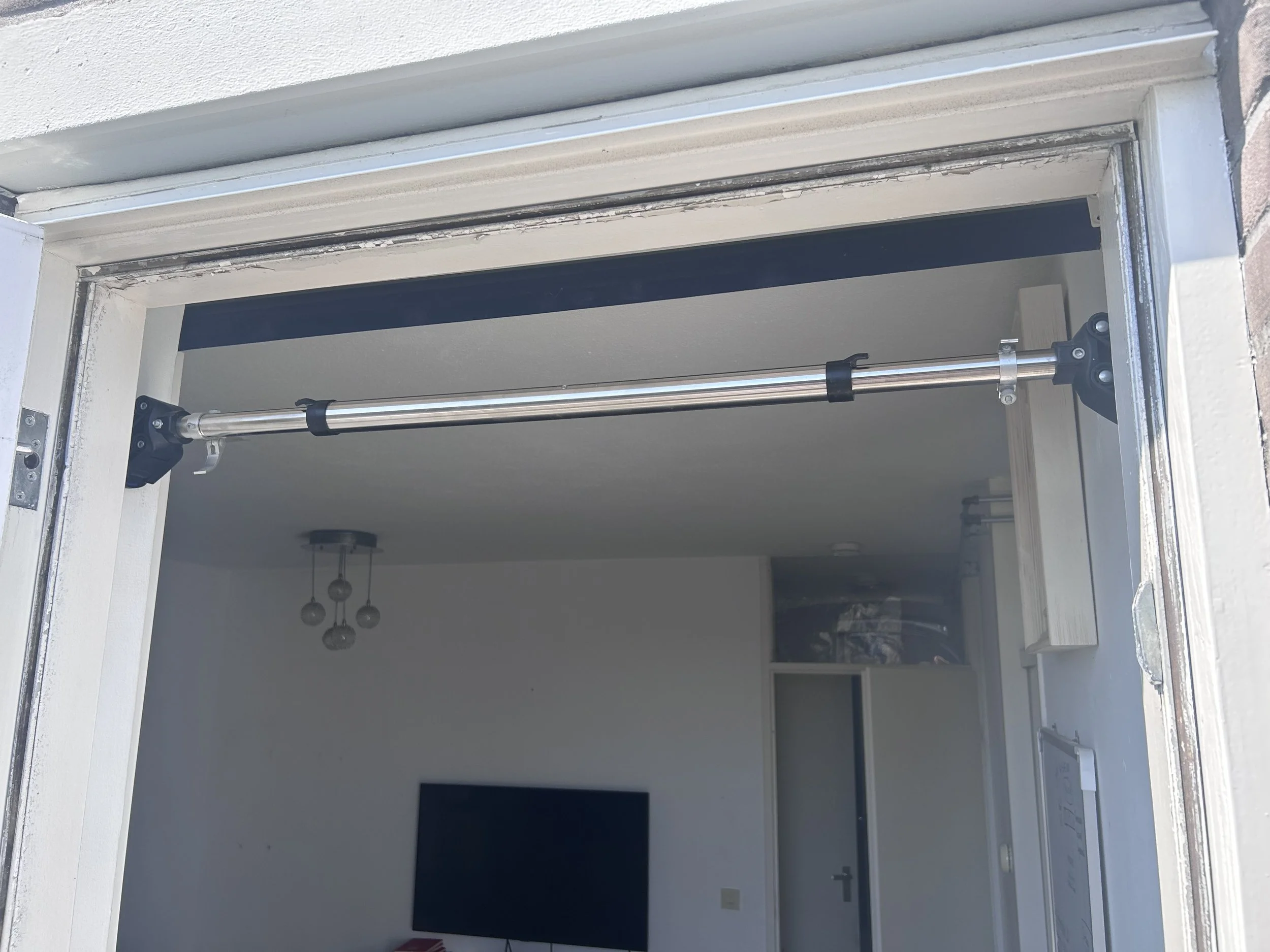
The important thing is to always check the measurements before purchasing. A pull-up bar that doesn't properly fit your doorway isn't the right pull-up bar for your home.
Do you need to drill?
Another important consideration is how the bar is installed.
Some pull-up bars are permanently mounted to a wall or ceiling. These can be excellent options if you have the right structure and you're happy to install something permanently.
But that's not necessarily what everyone wants. If you're renting, living in an apartment or simply don't want to drill holes into your walls, a no-drill pull-up bar can be a much more convenient option.
The Famba Home Pull-Up Bar uses a twist-to-expand mechanism and locking clamps rather than screws or drilling. It's designed to fit securely within the doorway without permanently modifying the door frame.
That makes it a practical option if you want to train at home without turning your doorway into a construction project.
What are you actually going to use it for?
A pull-up bar isn't only for pull-ups.
Depending on your ability and training programme, you can use it for dead hangs, scapular pull-ups, chin-ups, hanging knee raises, hanging leg raises, isometric holds and different pull-up progressions.
And if you're just starting your calisthenics journey, you don't need to already be able to do a pull-up before buying a pull-up bar. In fact, having access to a bar can be particularly useful when you're working towards your first one.
Your training might begin with something as simple as hanging from the bar. From there, you can work on scapular control, assisted movements, isometric holds and eccentric pull-ups before eventually building towards your first full repetition.
The bar doesn't have to be where you demonstrate what you can already do. It can be where you build what you can't do yet.
The best pull-up bar is one you'll actually use
This might be the most important consideration of all.
You can buy the strongest, most advanced or most expensive piece of equipment available. But if it's sitting in a box in your spare room, it isn't helping you get stronger.
Convenience matters.
If you have to travel to the gym every time you want to practise a pull-up, you've created another barrier between you and the movement. If you need to find a full hour in your schedule before you can train, you might end up training less often.
But if the bar is already there in your doorway, you have more opportunities to practise.
You might do a few hangs while you're waiting for your coffee. You might practise a few controlled repetitions before work. You might do a short session instead of waiting until you have the "perfect" time to train.
Those small opportunities can add up.
That's one of the reasons we created the Famba Home Pull-Up Bar. The idea isn't simply to give you another piece of equipment. It's to make pull-up training more accessible and remove some of the friction between wanting to get stronger and actually doing something about it.
Your first pull-up starts at your front door.
So, what's the best home pull-up bar?
There isn't one pull-up bar that's automatically the best choice for everyone. The right option depends on your home, your available space, your training goals and how you want to use it.
If you have a dedicated training space and you're happy to permanently mount equipment, a wall-mounted pull-up bar may be the right choice. If you want something removable and have a suitable doorway, a no-drill doorway pull-up bar could be a better fit.
And if you're a beginner working towards your first pull-up, I'd put particular emphasis on stability, accessibility and convenience.
Because you don't necessarily need more equipment. You need more opportunities to practise.
That's the philosophy behind the Famba Home Pull-Up Bar. It's designed for door frames between 72 and 92 cm, requires no screws or drilling, and is built to give you a stable and convenient place to train at home.
It also comes with a two-week pull-up programme, so you're not left wondering what to do once you've installed the bar.
..
Famba
Calisthenics Training
