
Are Doorway Pull-Up Bars Safe? What You Need to Know Before Buying One
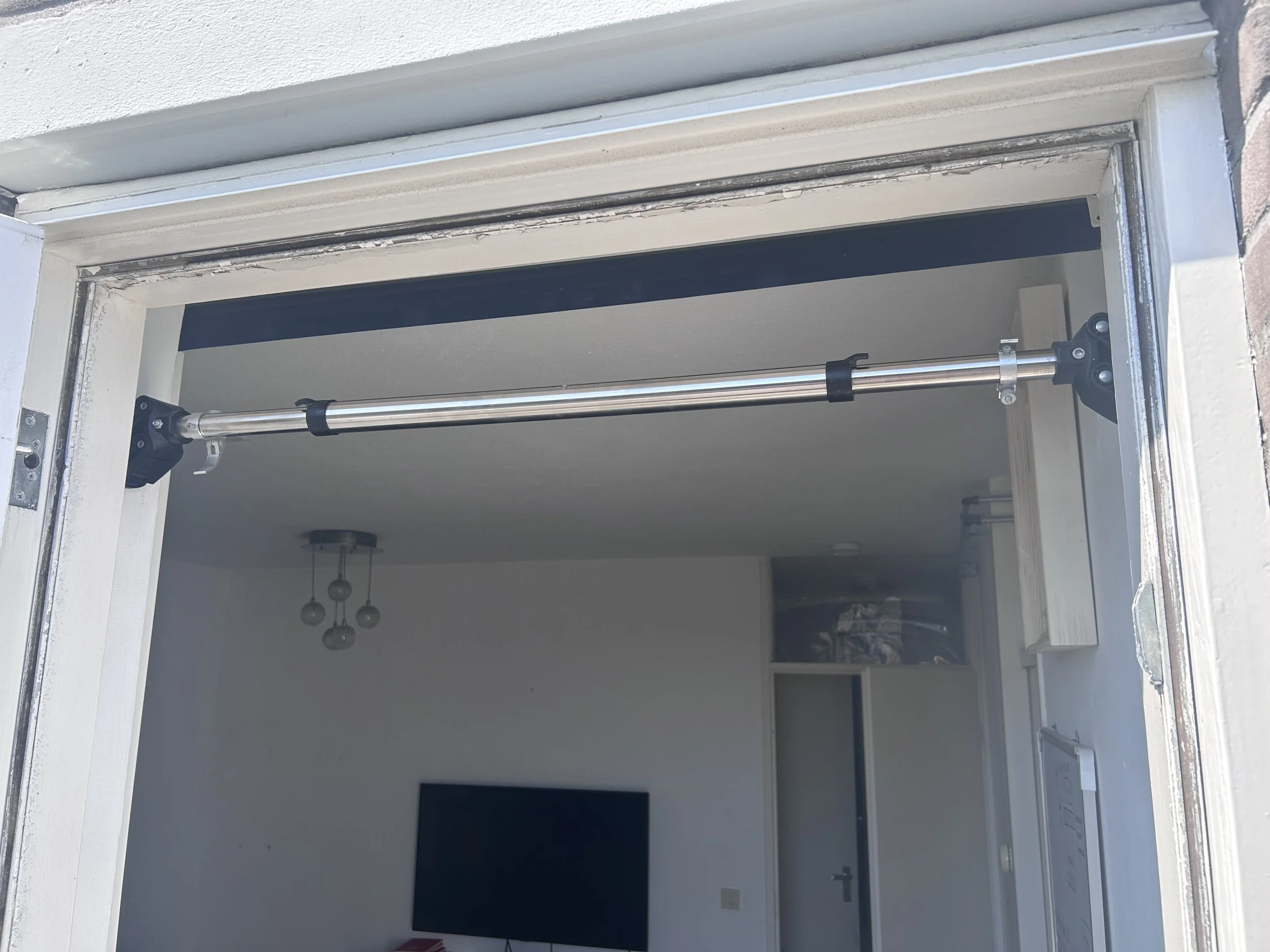
If you're thinking about buying a doorway pull-up bar, one of the first questions you might have is simple: are doorway pull-up bars actually safe?
It's a fair question.
After all, you're putting your bodyweight onto a piece of equipment that's attached to your door frame. You don't want to be halfway through a pull-up wondering whether the bar is going to stay where it is.
The good news is that a properly designed doorway pull-up bar can be a practical and effective way to train at home. But safety doesn't simply come from the fact that it's a pull-up bar. It comes from using the right equipment, installing it correctly and making sure it's suitable for your particular doorway.
So before you buy one, there are a few things worth understanding.
How Do Doorway Pull-Up Bars Work?
Unlike permanently mounted pull-up bars, many doorway pull-up bars use the structure of the door frame to support your bodyweight. There are several different designs available. Some use leverage against the frame, others use pressure or tension, while some combine an adjustable mechanism with locking points to create a secure connection.
This is why the design of the bar matters. You shouldn't simply look at a pull-up bar and think, "It fits in my doorway, so it must be safe." You need to understand how it is designed to support your weight and whether your particular doorway is suitable for that product.
A good doorway pull-up bar should feel stable when you're using it. You don't want excessive movement or slipping while you're hanging or performing controlled repetitions. The equipment should give you enough confidence that you can focus on your movement rather than worrying about whether the bar is going to move.
What Makes a Doorway Pull-Up Bar Safe?
There are a few important factors to consider when you're choosing a doorway pull-up bar. Stability is obviously one of them, but it's not the only consideration.
You also need to look at the construction quality, the materials used, the weight rating and the way the bar attaches to your doorway. Most importantly, the bar needs to be compatible with the dimensions and structure of the door frame you're planning to use.
Installation is another major factor. Even a well-designed pull-up bar can become unsafe if it hasn't been installed correctly. This is why it's important to follow the manufacturer's instructions rather than assuming you know how the bar should be positioned.
Check Your Door Frame Before You Buy
This is probably one of the most overlooked parts of buying a doorway pull-up bar.
People often focus on the bar itself and forget that the doorway is also part of the setup. Before buying one, measure the width of your door frame and compare it with the manufacturer's specifications. You should also check whether the shape and structure of your frame are compatible with the bar.
For example, the Famba Home Pull-Up Bar is designed for door frames between 72 and 92 cm wide. Its adjustable system allows you to set the bar to the appropriate width for your doorway.
The important thing isn't that every doorway is suitable for the Famba bar, or for any other particular bar. The important thing is to check the specifications before you buy and make sure the equipment you're choosing is actually designed for your space.
If you're unsure, don't guess.
Are No-Drill Pull-Up Bars Safe?
Another common question is whether a no-drill pull-up bar can be safe.
The answer is that a no-drill pull-up bar can be a perfectly practical option when it has been designed for that purpose, is installed correctly and is being used within its intended specifications.
The main advantage is convenience. You don't need to permanently attach the bar to your wall or door frame, which can be particularly useful if you're renting or simply don't want to make permanent changes to your home.
The Famba Home Pull-Up Bar uses a twist-to-expand mechanism and locking clamps rather than requiring screws or drilling. This allows it to be positioned within a suitable doorway without permanently modifying the frame.
However, "no-drill" doesn't mean "put it anywhere and start training." You still need to make sure your doorway is suitable, that the bar is correctly positioned and that the locking mechanism is properly secured before you put your full bodyweight on it.
What Weight Can a Doorway Pull-Up Bar Support?
Always check the manufacturer's stated weight rating before using a pull-up bar. This becomes particularly important because your bodyweight isn't necessarily the only force involved during training.
A controlled dead hang is different from jumping onto the bar, swinging or performing dynamic movements. The way you use the equipment matters as well as the stated weight capacity.
The Famba Home Pull-Up Bar has a stated maximum weight rating of 300 kg. However, that doesn't mean you should ignore the installation requirements or use the bar for movements outside its intended application. The manufacturer's instructions should always take priority.
Can a Doorway Pull-Up Bar Damage Your Door Frame?
This is another understandable concern.
Whether a doorway pull-up bar can damage a door frame depends on several factors, including the design of the bar, the construction of your doorway and how the equipment is installed and used.
A properly designed bar should distribute the forces through its intended contact points. However, not every doorway is constructed in exactly the same way, which is why checking compatibility is so important.
If your doorway is damaged, weak or otherwise unsuitable for the product, don't use it simply because the bar physically fits. Fits and is suitable aren't necessarily the same thing.
That's a useful distinction to remember when buying any piece of home fitness equipment.
Are Doorway Pull-Up Bars Good for Beginners?
Absolutely. In fact, one of the biggest advantages of having a pull-up bar at home is that you don't have to already be able to do a pull-up before you start using one.
If you're a beginner, you can start with something as simple as a dead hang. This allows you to build grip strength and become more comfortable supporting your bodyweight. From there, you can progress into scapular pull-ups, assisted pull-ups, isometric holds and eccentric pull-ups.
You can also simply use the bar to practise getting comfortable with hanging. The goal isn't to jump straight onto the bar and force yourself to do a pull-up. It's to gradually build the strength, control and confidence you need to perform one.
And having the equipment at home makes that process much easier to practise consistently.
What Should You Check Before Your First Workout?
Before putting your full bodyweight onto a doorway pull-up bar, take a moment to check the setup. Make sure the bar has been installed exactly as instructed and that the locking mechanism is secure. Confirm that your doorway falls within the manufacturer's specified dimensions and that the frame is suitable.
It's also sensible to test the bar progressively rather than immediately jumping into aggressive movements. Start with a controlled amount of load and make sure everything feels stable. If something doesn't feel right, stop and reassess the setup.
There is no prize for ignoring an obvious warning sign.
So, Are Doorway Pull-Up Bars Safe?
Yes, a properly designed doorway pull-up bar can be a safe and convenient way to train at home when it is compatible with your doorway, installed correctly and used according to the manufacturer's instructions.
But the key word is properly.
Don't choose a pull-up bar based purely on price or appearance. Look at how it attaches to the doorway, the materials used, the weight rating, the dimensions it supports and the manufacturer's installation requirements.
The Famba Home Pull-Up Bar is designed around making pull-up training accessible at home without requiring permanent drilling. It fits door frames between 72 and 92 cm, uses an adjustable twist-to-expand system with locking clamps and includes non-slip contact points.
The goal is simple: make it easier to have a stable place to train whenever you need it.
Because once you've established that your setup is suitable and secure, the next question becomes much more interesting: what are you going to do with it?
You don't need to start with ten pull-ups. You might start with ten seconds hanging from the bar, then twenty, then thirty. You might learn to control your shoulder blades, practise your first eccentric and eventually pull yourself over the bar for the first time.
That's where a doorway pull-up bar becomes more than just a piece of equipment. It becomes a way to make training part of your everyday environment.
And sometimes, making training easier to access is exactly what helps you become more consistent.
Always check your specific doorway and follow the manufacturer's installation, usage and safety instructions before using a pull-up bar.
..
Famba
Calisthenics Training
