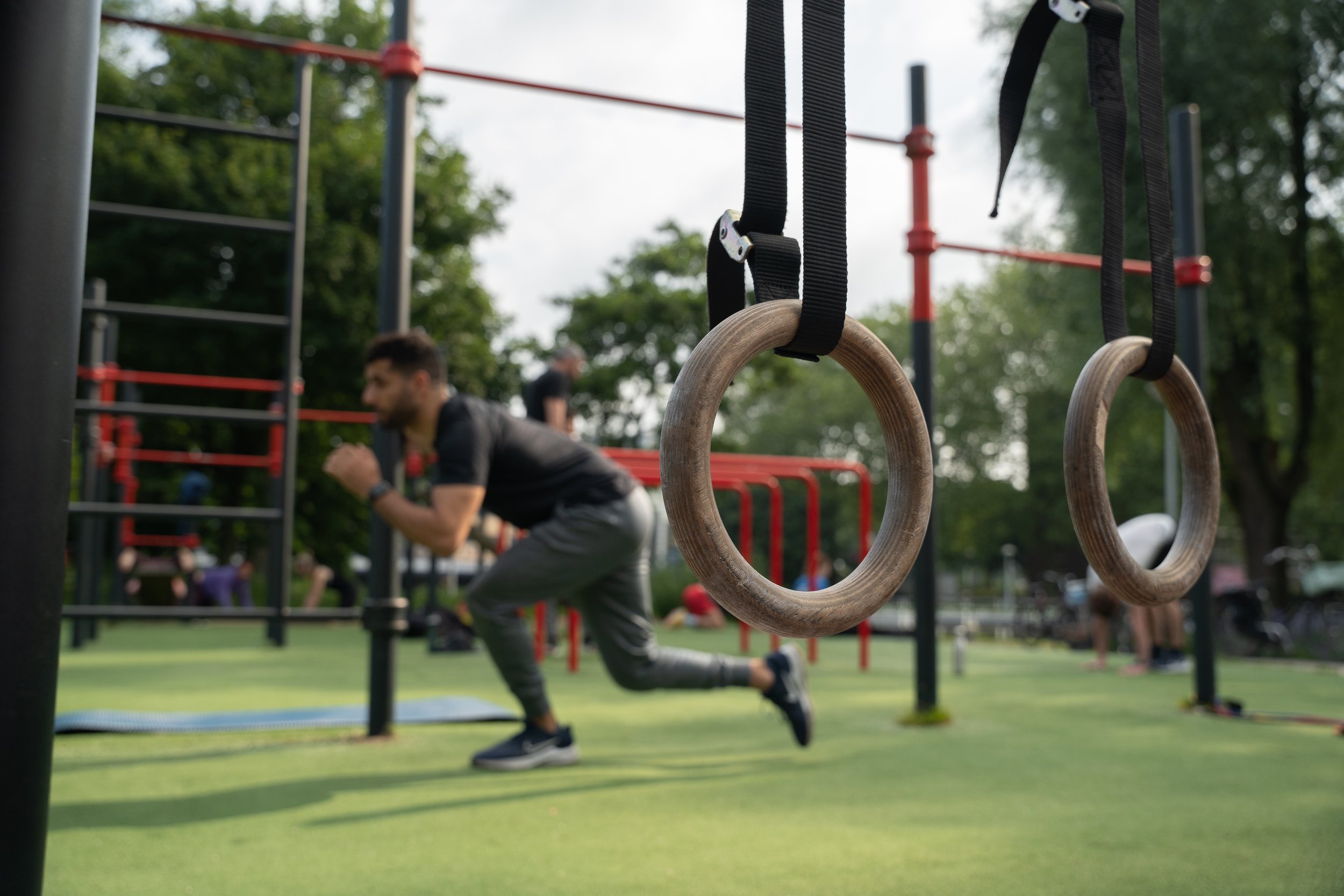
This isn’t a “calisthenics is better than the gym” post. It’s not. They’re different tools built for different goals, and the honest answer to “which one is right for me” depends entirely on you. Let’s break it down properly.
What the Gym Does Well
Gyms are good at isolation and load progression. Want to add exactly 2.5kg to your bench press every two weeks? A gym with a barbell and a spreadsheet does that beautifully. Machines let you target a single muscle with very little skill requirement. If your goal is pure hypertrophy, chasing a specific number on a specific lift, a well-run gym program is hard to beat.
Gyms also work in any weather, at any hour, with climate control and mirrors to check your form. For some people, that predictability matters more than anything else.
What Calisthenics Does Well
Calisthenics trains your whole body as one system, not a collection of parts. A pull-up isn’t just a back exercise, it’s grip strength, shoulder stability, and core control working together. That carries over into how your body actually performs in real life: carrying groceries up stairs, catching your balance, picking up your kid.
It’s also relative strength focused. Instead of asking “how much can I lift,” calisthenics asks “how well can you control your own bodyweight.” That’s a different, and for most people, more useful kind of strong. And in Amsterdam specifically, calisthenics means training outdoors, in daylight, in parks like Rembrandtpark and Sloterpark, not under fluorescent lights.
The Real Differences That Matter
Equipment: gym needs machines and free weights. Calisthenics needs a bar and open ground, which Amsterdam has no shortage of.
Cost: no monthly membership, no equipment purchase required to get started with calisthenics. A pull-up bar in a park is free, every single day.
Skill ceiling: calisthenics has an enormous skill progression, from your first assisted pull-up all the way to muscle-ups, levers, and handstand push-ups. That skill element keeps people engaged long after a machine routine starts feeling repetitive.
Environment: weather-dependent versus climate-controlled. This is a genuine downside of outdoor training, and we’ll be honest about it. Training through a Dutch winter takes more mental toughness than walking into a heated gym. It also builds more of it.
So Which One Fits You?
If you love the process of tracking numbers, prefer a controlled environment, and your main goal is building maximum muscle size, a traditional gym is a completely valid choice.
If you want functional strength that transfers to real life, you’re tired of paying for a membership you use twice a month, you like the idea of training outdoors instead of indoors, and you want a long-term skill progression to chase (pull-ups, dips, eventually a muscle-up), calisthenics is likely the better fit.
Plenty of people also combine both, using gym sessions for extra volume and calisthenics for skill and movement quality. There’s no rule against it.
Figuring Out What Actually Fits You
The honest answer is that “which is right for you” depends on your current fitness level, your goals, your schedule, and frankly your personality. Some people need a coach in their ear correcting their form on every rep. Others need a program built specifically around a bad shoulder or a busy work schedule. A generic answer online can’t account for any of that.
That’s exactly what a 1:1 session is for, an honest look at where you’re starting from, what you actually want out of training, and a plan built around your body, not a generic template.