
Beginner’s Guide to Using a Pull-Up Bar at Home
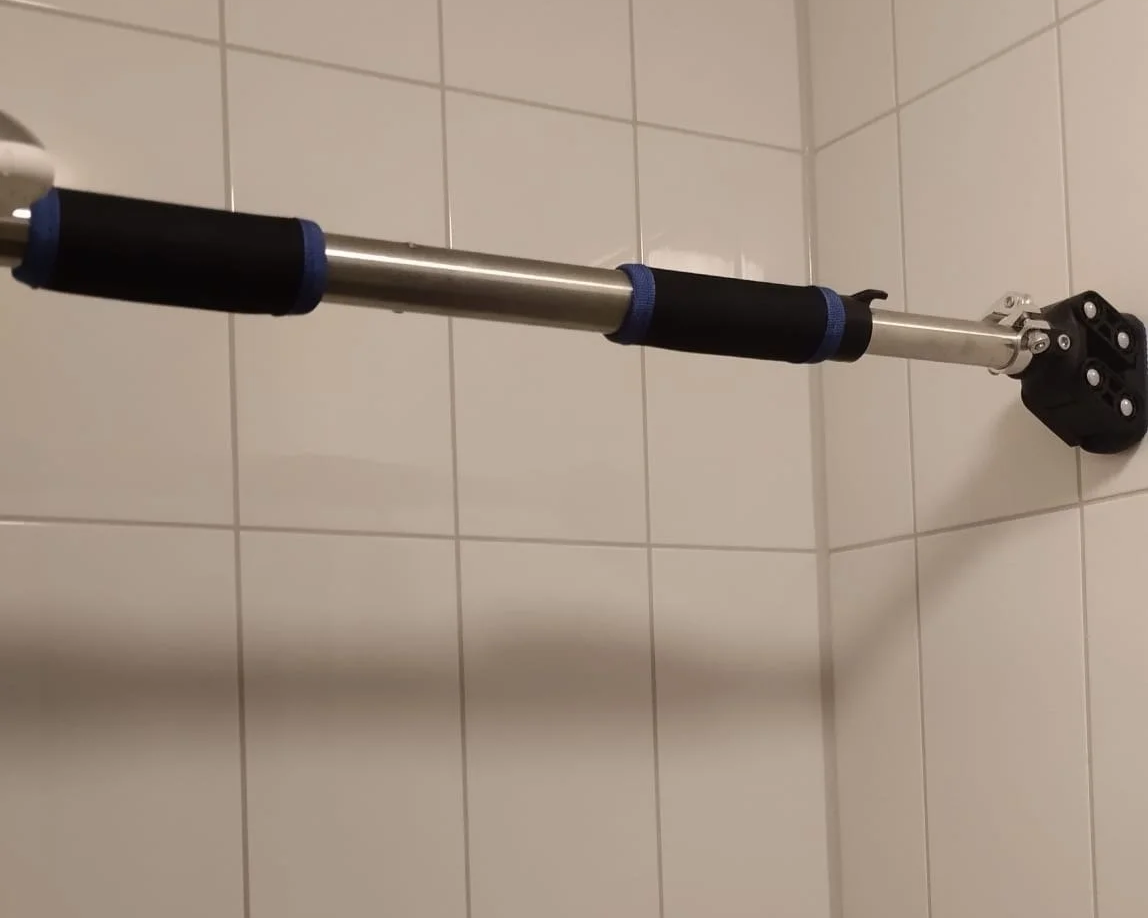
Getting a pull-up bar for your home is one thing.
Knowing what to actually do with it is another.
If you're new to calisthenics, it's easy to look at a pull-up bar and think, “I can't even do a pull-up yet, so what's the point?”
But that's exactly where many beginners get it wrong.
A pull-up bar isn't only for people who can already do pull-ups. It can be a tool you use from your very first workout, helping you gradually develop grip strength, shoulder control, pulling strength and body awareness.
The key is simply knowing where to start.
How should a beginner start using a pull-up bar?
If you're completely new, don't worry about trying to do full pull-ups straight away.
Start by getting comfortable hanging from the bar. A dead hang is one of the simplest ways to introduce your body to supporting itself from above. From there, you can gradually introduce movements such as scapular pull-ups, assisted pull-ups and controlled eccentric pull-ups.
Think of it as learning a new skill rather than passing a test.
You don't need to prove that you're strong enough to do a pull-up on day one. You just need to give your body an appropriate starting point and gradually build from there.
What should you do if you can't do a pull-up yet?
This is probably the most common question I hear from beginners.
If you can't do a pull-up yet, you have plenty of options.
You can start with dead hangs to work on your grip. Scapular pull-ups can help you learn how to control your shoulders while hanging. Assisted pull-ups allow you to practise the pulling movement with some of your bodyweight supported, while eccentric pull-ups let you practise controlling yourself on the way down.
These aren't “lesser” versions of a pull-up.
They're steps along the path towards one.
The mistake is thinking that you have to repeatedly attempt the final movement before you can start developing the qualities that make the movement possible.
How often should a beginner use a pull-up bar?
You don't need to spend hours hanging from your pull-up bar to make progress.
For most beginners, a few focused sessions per week can be a much more sensible starting point than trying to train your pulling muscles every day.
Your muscles, joints and connective tissues need time to recover, especially when you're introducing your body to something it isn't used to.
Consistency is more important than trying to do everything at once.
A short session that you can repeat week after week will usually take you further than one huge workout followed by several days of soreness and no training.
How long should you hang from a pull-up bar?
There's no single amount of time that everyone needs to achieve.
If you're new to hanging, start with a duration that you can control comfortably. That might only be 10 or 20 seconds. As your grip improves, you can gradually increase the duration.
One useful goal for beginners is eventually being able to hang comfortably for around 30–60 seconds.
But don't treat that number as a requirement before you're allowed to move on.
The purpose is to build your capacity gradually, not turn every workout into a grip-strength competition.
Should you train pull-ups every day?
Not necessarily.
Because pull-ups involve several muscles and place stress on your hands, elbows and shoulders, doing hard pull-up training every day isn't automatically better.
More training isn't always more progress.
Instead, focus on the quality of the work you're doing and give your body enough time to adapt. You can still interact with your pull-up bar on non-training days if you're doing something light, but hard strength sessions should have appropriate recovery built around them.
This is especially important when you're a beginner and your body is still learning how to handle the movement.
How long does it take to get your first pull-up?
This is one of those questions where the honest answer is: it depends.
Your starting strength, bodyweight, training history, technique, consistency and recovery will all influence how quickly you progress.
Some people may get their first pull-up relatively quickly. Others may need several months of consistent training.
Try not to make the mistake of comparing your timeline with someone else's.
Instead, look for smaller signs of progress.
Maybe you can hang for 20 seconds when you previously could only manage five. Maybe your scapular pull-ups feel more controlled. Maybe you're using less assistance. Maybe your eccentric pull-up is becoming slower and stronger.
Those are all signs that you're moving in the right direction.
What is the best pull-up bar workout for a beginner?
You don't need a complicated routine.
A beginner could start with a combination of dead hangs, scapular pull-ups and an assisted pulling movement. As strength develops, you can introduce isometric holds and eccentric pull-ups before progressing towards full repetitions.
The exact number of sets and repetitions should depend on your current ability.
The important thing is that the exercises match your level.
If you can't perform a controlled pull-up, doing endless failed attempts isn't necessarily the best use of your training time. Build the pieces first.
Then put them together.
Can you use a doorway pull-up bar every day?
Having a pull-up bar at home makes it very easy to access your training, but that doesn't mean you need to perform hard workouts every day.
One of the biggest advantages of a doorway pull-up bar is simply that it's there when you need it.
You don't have to drive to the gym. You don't need to set up a complicated workout station. And you don't need an hour of free time before you can start.
You can build your training around your life rather than constantly trying to find a way to fit your life around training.
That's particularly useful when you're starting out.
What are the biggest beginner mistakes with a pull-up bar?
One of the biggest is trying to progress too quickly.
You see someone doing impressive pull-ups online, grab the bar and immediately try to copy them.
But your body hasn't built the foundation yet.
Another common mistake is doing repetitions with poor control simply to hit a certain number. Quality matters. If you're swinging, kicking or losing control of your shoulders, you're not necessarily building the skill you're trying to develop.
And finally, don't underestimate recovery.
Your body gets stronger when it adapts to training. Training is the stimulus; recovery is part of the process.
Give yourself time to improve.
Start with where you are
The biggest thing I'd like a beginner to take away from all of this is that you don't need to be able to do a pull-up before you start training with a pull-up bar.
That's backwards.
The bar is one of the tools that can help you become strong enough to do one.
Start with a hang.
Learn to control your shoulders.
Build your pulling strength.
Use assistance when you need it.
Progress gradually.
And eventually, the movement that once seemed impossible starts to become something your body understands.
That's what I like about calisthenics. You don't need to begin at the end.
You just need to begin.
