
Can You Build Muscle With Just a Pull-Up Bar?
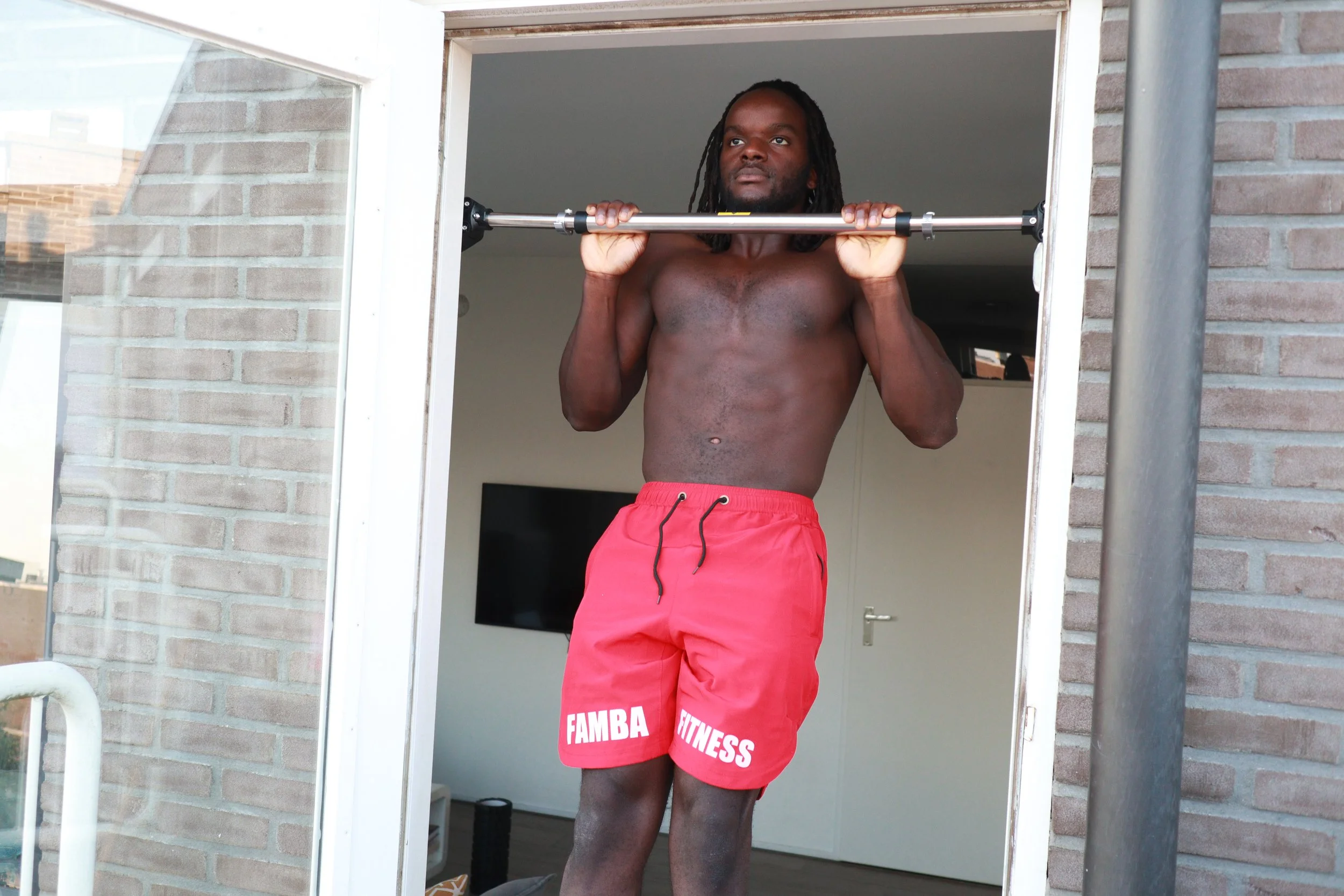
When people hear “build muscle,” they often picture a gym filled with dumbbells, barbells and machines.
But do you actually need all of that to build muscle?
Not necessarily.
If you're interested in calisthenics or training at home, a pull-up bar can be a surprisingly effective tool for building strength and muscle. You can train your back, arms, shoulders and grip, and with the right progressions, you can continue challenging your body as you become stronger.
The important part is understanding how to use the bar properly. Simply doing the same number of pull-ups every week isn't going to produce endless progress. Your body needs a reason to adapt.
Can you build muscle with just a pull-up bar?
Yes, you can build muscle with a pull-up bar, particularly in your back, biceps, forearms and shoulders. Pull-ups, chin-ups and other pulling variations allow you to train against your own bodyweight, and you can progressively increase the difficulty as you become stronger.
But there's an important distinction.
A pull-up bar is excellent for developing your upper body, but it isn't a complete solution for training every muscle in your body. If your goal is overall strength and fitness, you'll want to combine your pull-up bar exercises with other bodyweight movements that train your legs, pushing muscles and core.
That's where calisthenics becomes interesting.
You don't need to rely on one exercise or one piece of equipment. You can use the pull-up bar as one part of a much bigger bodyweight training system.
What muscles does a pull-up bar work?
The main muscles involved in pulling exercises are the muscles of your back and arms.
During a pull-up, you're using your lats, upper back, biceps and forearms while your shoulders and core also have to contribute to controlling your body.
That's one of the reasons pull-ups are such a useful exercise. You're not isolating one muscle while sitting on a machine. You're asking your body to coordinate several muscles to move and control your entire bodyweight.
And the more difficult the movement becomes, the more your body has to adapt.
How many pull-ups should you do to build muscle?
There's no magic number of pull-ups that guarantees muscle growth.
What matters more is the challenge you're creating.
If you can currently do three controlled pull-ups, doing three repetitions may be a significant stimulus for your body. But if you can comfortably perform 20 repetitions, simply repeating sets of three probably isn't going to challenge you in the same way.
This is where progressive overload comes in.
You can increase repetitions, improve your technique, slow down the movement, add pauses, reduce assistance or eventually introduce more difficult variations.
The goal isn't simply to do more and more repetitions forever.
The goal is to keep giving your body a reason to become stronger.
Can beginners build muscle with a pull-up bar?
Absolutely, although a beginner's approach will look different from someone who has been training for years.
If you can't perform a pull-up yet, you can still train the muscles involved in the movement. Dead hangs, scapular pull-ups, assisted pull-ups, isometric holds and eccentric pull-ups can all help you develop the strength required for a full repetition.
And when you're new to training, you don't need complicated exercises to make progress.
Your body is already being exposed to a new stimulus, so even relatively simple movements can be challenging.
This is one reason I like calisthenics for beginners. You can start with where you are rather than feeling like you need to become strong before you can begin.
Can you build your back with a pull-up bar?
Yes. Pull-ups and their variations are particularly useful for developing your pulling muscles, including your lats and upper back.
But don't fall into the trap of thinking that you need to perform hundreds of repetitions to build your back.
Instead, focus on quality.
Control the movement. Use a range of motion that you can actually control. Pay attention to what your shoulders and back are doing rather than simply trying to get your chin over the bar.
As you become stronger, you can make the exercise progressively more difficult.
That's where the real potential of a pull-up bar comes from.
What if normal pull-ups become too easy?
This is where things get fun.
Once regular pull-ups become easy, you have plenty of ways to make them more challenging.
You can experiment with slower repetitions, pauses, different grips and more demanding variations. You can also eventually add external resistance if you're at a level where that makes sense for your training.
This means a pull-up bar doesn't have to become useless once you've achieved your first pull-up.
Your first pull-up is actually the beginning of another phase of training.
Instead of asking, “How do I get one pull-up?”, you're now asking, “How can I make this movement stronger?”
That's a very different training journey.
Do you need weights to build muscle?
No. Muscle growth can happen through bodyweight training as long as the muscles are exposed to sufficient training stimulus and you progressively increase the challenge.
Weights can be extremely useful, and I'm not against them at all. But they're not the only way to get stronger or build muscle.
Your body doesn't know whether the resistance came from a dumbbell, a cable machine or your own bodyweight.
It responds to the demands you place on it.
That's one of the principles behind calisthenics: learning how to progressively control and challenge your own body.
Can you build a full-body workout with a pull-up bar?
Yes, but you need to look beyond the pull-up itself.
A pull-up bar gives you an excellent tool for pulling movements, but a balanced home workout should also include exercises for pushing, legs and your core.
You might combine pull-ups or their progressions with push-ups, squats, lunges, dips if you have a suitable setup, and different core exercises.
The result doesn't need to be complicated.
You can build a surprisingly effective workout with very little equipment when you understand what you're trying to train and how to progress it.
Is a pull-up bar enough for a home workout?
A pull-up bar can be enough to form the foundation of an effective home workout, particularly when combined with bodyweight exercises.
And that's really the bigger point.
You don't need to wait until you have the perfect home gym before you start training.
You can start with one useful tool and your own bodyweight, learn how to use them properly and gradually build your strength from there.
That's exactly the approach I like about calisthenics.
Start simple.
Learn to control your body.
Get stronger.
Then make things harder when your body is ready.
A pull-up bar might look like a very simple piece of equipment, but what you can do with it can change quite dramatically as you progress.
At the beginning, it might help you hold your first dead hang.
Then it might help you get your first pull-up.
Later, it might become the tool you use to develop serious pulling strength.
The equipment doesn't necessarily need to change. You do.
And that's where the real value of training at home comes in. You don't need more equipment just for the sake of having more equipment. You need a clear goal, a way to challenge yourself and the consistency to keep progressing.
A pull-up bar can give you the starting point.
What you build from there is up to you.
