
Why Every Home Gym Needs a Pull-Up Bar
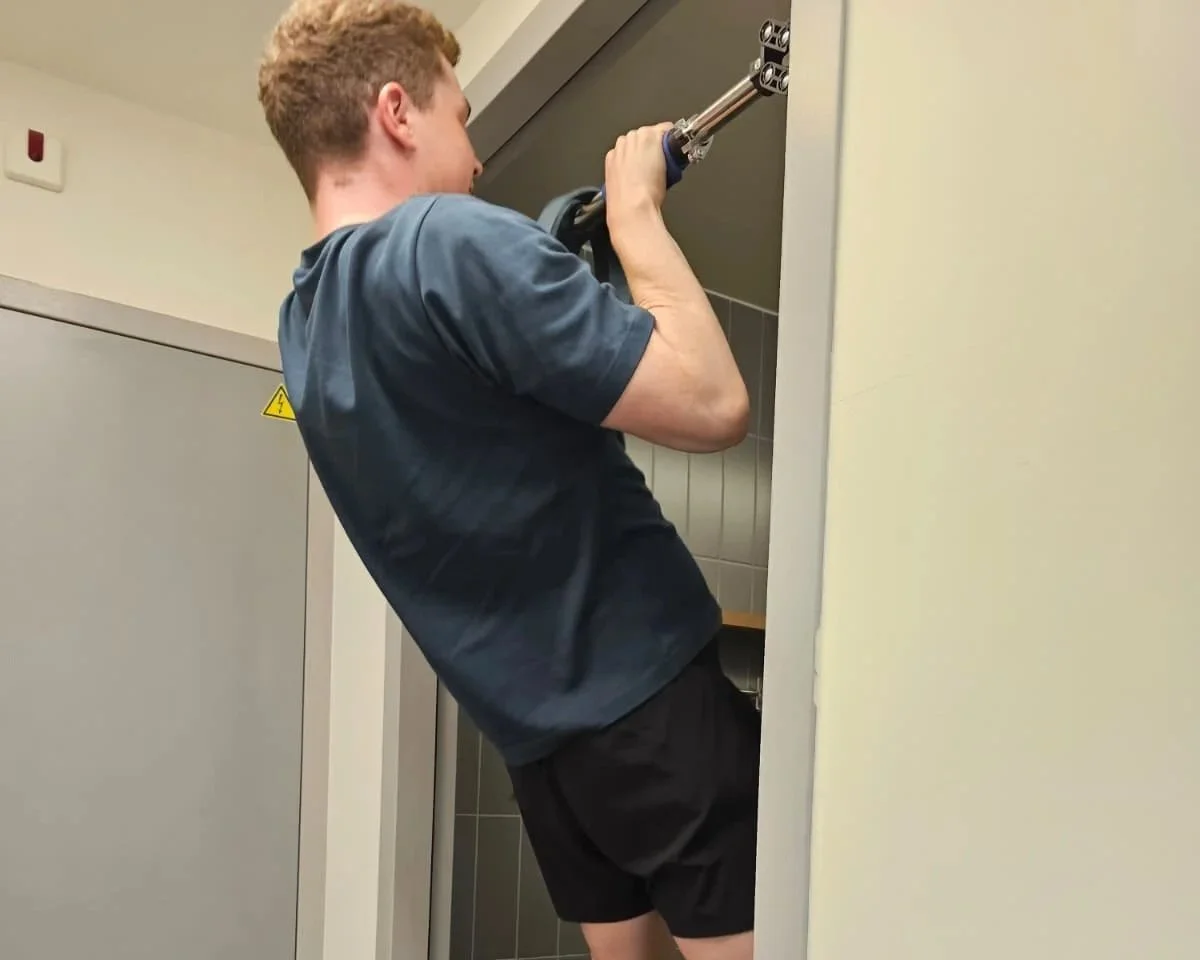
When people think about building a home gym, they often start thinking about weights, benches, dumbbells and machines. And while all of these can have their place, there's one piece of equipment that I think is often overlooked: a pull-up bar.
You don't need a room full of equipment to train effectively. In fact, one of the great things about calisthenics is that you can do a lot with very little. Your body is already the main piece of equipment, and a pull-up bar simply gives you something to work against.
Whether you're already training regularly or you're just starting to build a home workout routine, a pull-up bar can give you far more options than the name might suggest.
Why is a pull-up bar useful for home workouts?
The obvious answer is that you can do pull-ups with it. But that's only the beginning.
A pull-up bar gives you a place to train your grip, upper back, shoulders and arms while also challenging your ability to control your bodyweight. You can use it for dead hangs, scapular pull-ups, chin-ups, assisted pull-ups, isometric holds and eccentric pull-ups, among other movements.
That means the same piece of equipment can be useful whether you're completely new to training or you've been doing calisthenics for years.
For a beginner, it can become the tool you use to work towards your first pull-up. For someone more experienced, it can become part of a much broader strength and skill routine.
Do you need a lot of equipment to train at home?
Not necessarily.
One of the biggest mistakes people make when setting up a home gym is thinking that more equipment automatically means better training. You can end up buying piece after piece until you have a room full of equipment, but still don't have a clear idea of what you're actually trying to improve.
A pull-up bar is useful precisely because it's simple.
You can use it as part of a short workout or combine it with other bodyweight exercises to create a much larger session. You can train your upper body, work on your grip and develop pulling strength without needing a complicated setup.
And because it takes up very little space, it's much easier to keep it available and actually use it.
Can a pull-up bar help you get your first pull-up?
Yes, and you don't need to be able to do a pull-up before you start using one.
This is something I think is important for beginners to understand. A pull-up bar isn't just for people who are already strong.
If you can't do a pull-up yet, you can start with dead hangs to develop your grip and become comfortable supporting your bodyweight. From there, you can work on scapular pull-ups, assisted pull-ups, isometric holds and eccentric pull-ups.
Each of these movements helps you develop a different part of the skill.
Instead of constantly jumping onto the bar and trying to force out a pull-up, you can gradually build the strength and control required to perform one.
Eventually, those individual pieces start coming together.
What other exercises can you do with a pull-up bar?
A good home pull-up bar gives you much more variety than just standard pull-ups.
Dead hangs can be used to develop grip strength and build familiarity with hanging. Scapular pull-ups can help you work on shoulder-blade control. Chin-ups provide another way to develop your pulling strength, while isometric holds allow you to practise producing force in specific positions.
You can also use the bar for eccentric pull-ups, where you start at the top and slowly lower yourself down. This can be particularly useful if you're working towards your first full repetition.
The point is that you can adjust the exercises to your current ability. You don't have to be an advanced athlete to get value from a pull-up bar.
Why is a pull-up bar good for consistency?
This might actually be one of the biggest reasons to have one at home.
Training consistently isn't always about motivation. Sometimes it's about convenience.
If you need to travel to the gym every time you want to practise a pull-up, that's another barrier between you and your training. But when the bar is already in your home, you can train whenever you have the opportunity.
You can hang from it for a few seconds when you walk past. You can practise a few scapular pull-ups. You can spend 15 minutes working on your current progression.
These small opportunities can make training feel much more accessible.
And the easier something is to start, the more likely you are to keep doing it.
Is a doorway pull-up bar a good option for a home gym?
For many people, yes.
Not everyone has the space, permission or desire to install a permanent pull-up bar into their wall or ceiling. A doorway pull-up bar can be a practical alternative because it uses space you already have.
The Famba Home Pull-Up Bar is designed for compatible door frames between 72 and 92 cm wide and uses an adjustable twist-to-expand system with locking clamps, allowing you to install it without drilling.
That makes it particularly useful if you want a simple home training setup without dedicating an entire room to fitness equipment.
As always, your specific doorway needs to meet the product requirements, and you should follow the manufacturer's installation and safety instructions before using the bar.
How much space does a home pull-up bar take?
Very little compared with many other pieces of home gym equipment.
That's one of the reasons I like the idea of a pull-up bar for home training. You don't need to clear half your living room or dedicate an entire garage to it.
If you have a suitable doorway, you already have the basic location for your training setup.
The equipment can simply become part of your environment rather than something that needs to be unpacked every time you want to train.
And there's something useful about that.
When your training equipment is visible and accessible, you're constantly reminded that you have the option to move.
Is a pull-up bar worth having at home?
If you're interested in calisthenics, bodyweight training or developing upper-body strength, I'd say a pull-up bar is one of the most useful pieces of equipment you can add to a home setup.
It's simple, versatile and suitable for different levels of ability. You can use it to build your first pull-up or continue developing your strength long after you've achieved it.
But perhaps the biggest benefit isn't what the pull-up bar can do.
It's what having one makes easier.
It gives you a place to practise. It removes some of the friction from training. And it puts one of the foundations of calisthenics directly into your everyday environment.
You don't need a complicated home gym.
You need the right tools, a clear goal and a reason to keep showing up.
And sometimes, that can start with something as simple as a bar in your doorway.
