
Pull-Up Bar Exercises You Can Do at Home
When you think about a pull-up bar, the first exercise that probably comes to mind is the pull-up. And that makes sense. A pull-up bar is one of the simplest pieces of equipment you can have for developing upper-body strength.
But here's the thing: you don't need to be able to do a pull-up to get a lot of value from a pull-up bar.
In fact, if you're a beginner, the pull-up itself might be one of the last exercises you should focus on. There are several other movements you can practise first to build your grip, shoulders, back and overall body control.
And that's what makes having a pull-up bar at home so useful. You have a simple piece of equipment that can give you plenty of different ways to train, whether you're working towards your first pull-up or simply looking for more ways to build strength at home.
What exercises can you do with a pull-up bar?
There are plenty of exercises you can perform with a pull-up bar, including dead hangs, scapular pull-ups, pull-ups, chin-ups and different pull-up progressions. You can also use the bar as part of a wider calisthenics routine to train your grip, shoulders, core and upper body.
Let's start with one of the simplest.
1. Dead Hangs
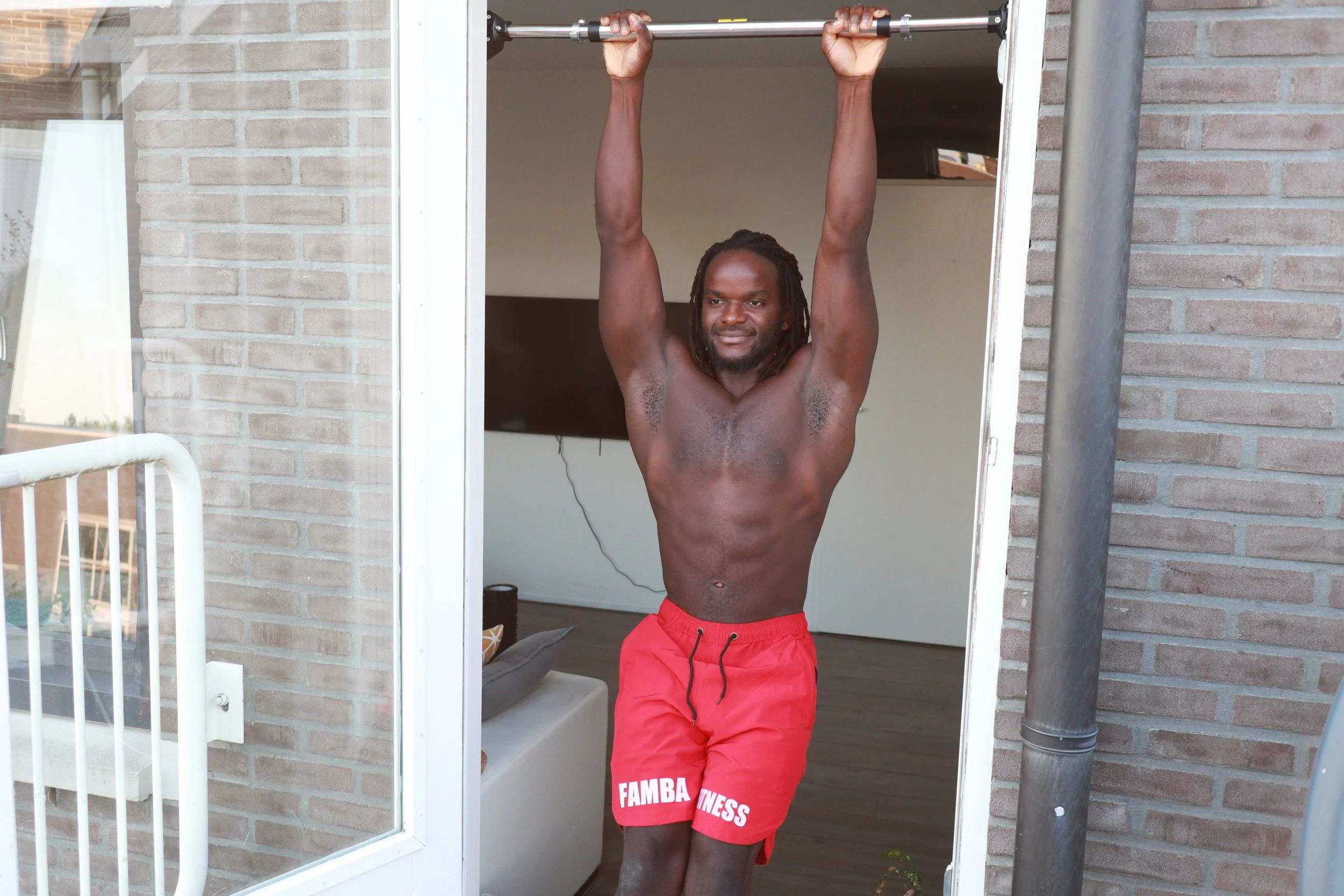
A dead hang is exactly what it sounds like. You grab the bar and hang from it.
It might not look particularly challenging, especially when you see more advanced calisthenics movements, but don't underestimate it. If you're new to hanging from a bar, your grip and forearms will probably let you know pretty quickly.
Dead hangs are a great starting point because they allow you to become comfortable supporting your own bodyweight. You're developing your grip strength while also getting used to the feeling of hanging from the bar.
Start with a manageable amount of time and gradually build it up. You don't need to try to hang for several minutes on your first attempt. The goal is controlled progress.
2. Scapular Pull-Ups
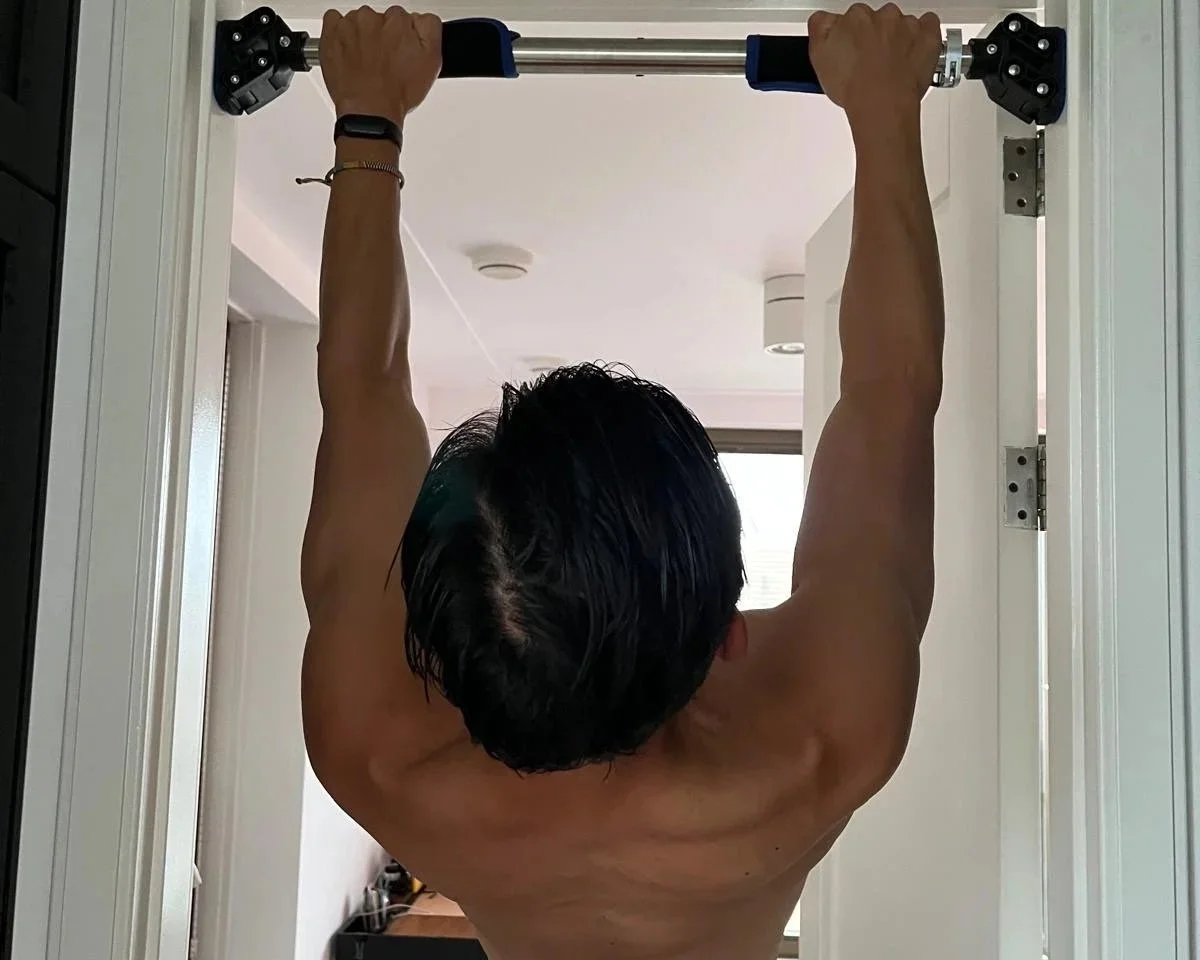
Once you're comfortable hanging, you can start working on your scapular control with scapular pull-ups.
This is where you keep your arms relatively straight and focus on moving your shoulder blades rather than trying to pull your entire body over the bar.
It might seem like a small movement, but it's an important one.
Your shoulder blades play a major role in how you control your body during pulling movements. Learning to move and stabilise them while hanging from the bar gives you a foundation that you can carry into your pull-ups later.
If you're working towards your first pull-up, this is one exercise I'd definitely keep in your training.
3. Assisted Pull-Ups
If you can't perform a full pull-up yet, that doesn't mean you have to wait before practising the movement.
You can use assistance to reduce the amount of bodyweight you're required to pull. Depending on your setup, this could involve resistance bands, a foot-assisted variation or another method that allows you to control how much assistance you're using.
The important thing is that the assistance allows you to practise the actual pulling pattern while maintaining good control.
As you get stronger, you gradually reduce the assistance.
That's much more useful than repeatedly jumping onto the bar and hoping that eventually you'll magically become strong enough to pull yourself up.
4. Isometric Pull-Up Holds
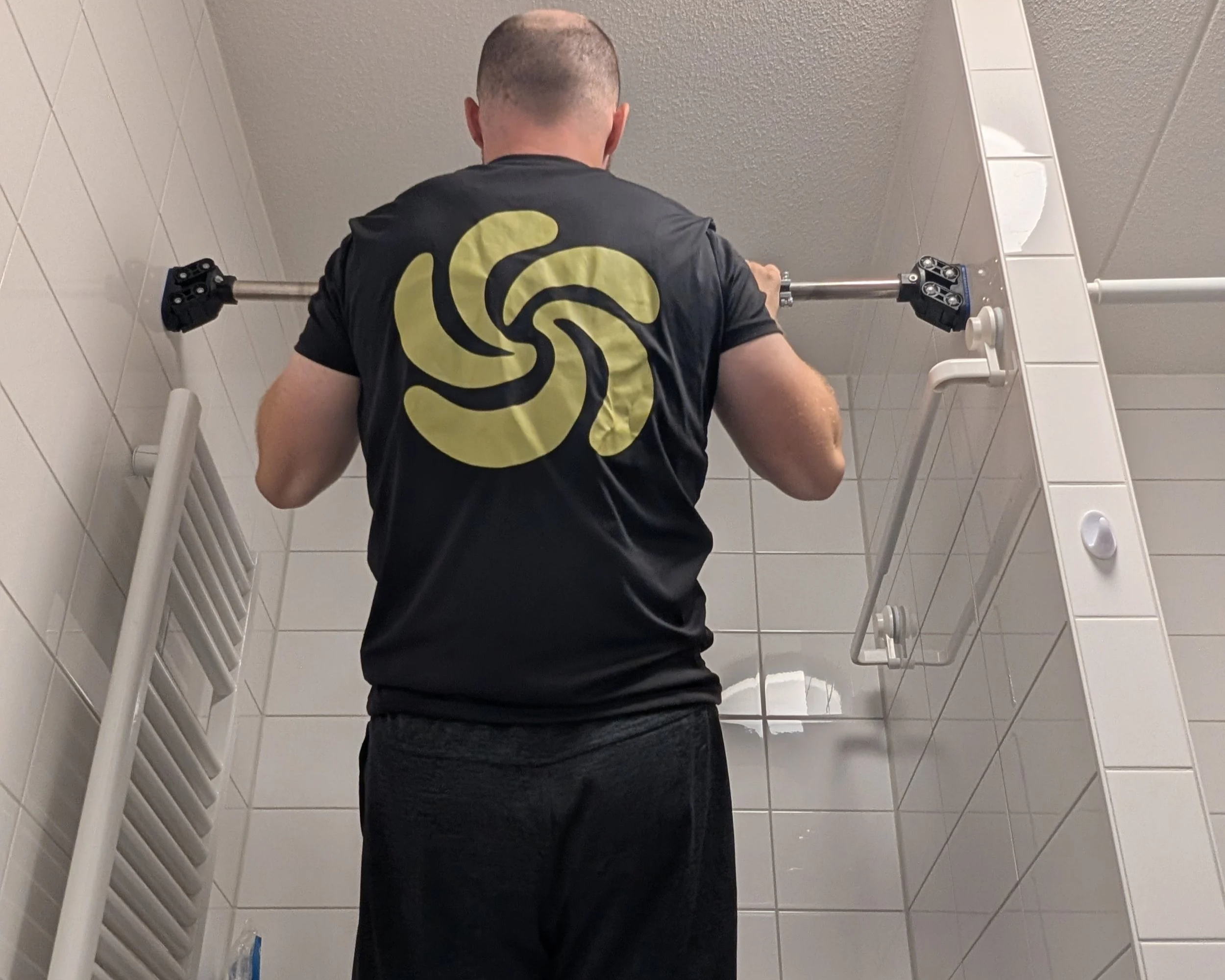
Another great exercise you can do with a pull-up bar is an isometric hold.
Instead of moving through a repetition, you hold your body in a particular position. For example, you can use a step to get your chin above the bar and then hold yourself there.
This teaches you to produce force while maintaining a specific position.
You can also experiment with different positions throughout the pull-up. Holding near the top, in the middle or at another point in the movement can help you identify where you're strongest and where you struggle.
For beginners, you can keep your feet lightly supported and gradually reduce that assistance as you become stronger.
5. Eccentric Pull-Ups
If you're working towards your first pull-up, eccentric pull-ups are another useful progression.
The idea is to start at the top of the movement and slowly lower yourself down.
You can use a step or another method to get yourself into the top position. From there, try to control the descent rather than simply dropping to the bottom.
This allows you to practise controlling your body through the pull-up movement without having to generate all of the force required to pull yourself upwards.
Over time, you can work towards making the lowering phase slower and more controlled.
6. Chin-Ups
If you're already building some pulling strength, chin-ups can be another useful variation.
The main difference is your hand position. With a chin-up, your palms face towards you, which can change how the movement feels and how your arms contribute to the exercise.
For many beginners, chin-ups can feel more accessible than a traditional pull-up. That makes them a useful progression when you're developing your pulling strength.
You don't necessarily need to choose between pull-ups and chin-ups. Both can have a place in your training depending on your goals and current ability.
Can you build muscle with a pull-up bar at home?
Yes. A pull-up bar can be used to develop your back, arms, shoulders and grip, particularly when you progressively increase the difficulty of your exercises.
However, you don't need to turn every home workout into a huge volume session.
What matters is giving your body an appropriate challenge and gradually progressing over time. As an exercise becomes easier, you can increase the repetitions, improve your control, reduce assistance or move towards a more difficult progression.
That's how you continue giving your body a reason to adapt.
How often should you train with a pull-up bar?
There isn't one perfect answer because it depends on your current level, your overall training programme and how you're recovering.
If you're a beginner, you might start with a few focused sessions each week rather than trying to train your pulling muscles every single day.
The key is to leave enough room for recovery and pay attention to how your body feels.
You also don't need every session to be long. One of the benefits of having a pull-up bar at home is that you can make your training very accessible. A short session focusing on a few quality movements can be much more useful than waiting for the perfect opportunity to complete a two-hour workout.
Can beginners use a pull-up bar at home?
Absolutely.
You don't need to be able to perform a pull-up before buying a pull-up bar. In fact, having access to a bar can make it much easier to work towards your first one.
You can start with dead hangs, scapular pull-ups and assisted movements before progressing to isometric holds, eccentrics and eventually your first full pull-up.
This is one of the principles I come back to again and again with calisthenics: meet your body where it is and build from there.
You don't have to skip straight to the hardest exercise.
Why train with a pull-up bar at home?
The biggest advantage might actually be convenience.
When your pull-up bar is already in your home, you don't have to travel to a gym every time you want to practise. You can get a few minutes of training in when you have the opportunity, whether that's before work, during a break or in the evening.
And that convenience matters because consistency is often less about finding more motivation and more about removing unnecessary obstacles.
This is one of the reasons we created the Famba Home Pull-Up Bar. It's designed to give you a simple way to train at home without needing to permanently drill into your walls. The bar fits compatible door frames between 72 and 92 cm and uses an adjustable twist-to-expand system with locking clamps.
Of course, you should always check that your particular doorway meets the product requirements and follow the manufacturer's installation and safety instructions before using it.
The goal isn't to give you another piece of equipment that ends up sitting unused.
It's to make training easier to access.
Because when the bar is right there, you have fewer excuses to wait for the "perfect" time to train.
And you don't need to do a hundred pull-ups.
Start with a hang.
Work on your shoulder control.
Build your pulling strength.
Then gradually work your way towards the movement you've been trying to achieve.
That's the beauty of having a pull-up bar at home: you can start wherever you are and build from there.
